In the era of Industry 4.0, automation is the ultimate indicator of a manufacturer’s capability, speed, and quality consistency. When global procurement heads and enterprise clients watch your industrial corporate video, they are actively looking to see if your facility utilizes modern robotics or relies on outdated, error-prone manual workflows.
However, simply pointing a static camera at a robotic arm is not enough to build commercial trust. To truly leverage your technological investment as a sales tool, your corporate film must capture automation in a way that highlights engineering precision, high-volume capacity, and absolute operational efficiency.
Here is a practical guide on how a professional production team characteristically showcases automation inside a factory video to convert viewers into high-value inquiries.
1. Utilize Indoor FPV Drone Flythroughs for Spatial Continuity
Standard ground-based cameras can only capture one robotic station or conveyor line at a time, which fails to show how your automated systems connect with each other.
The Cinematic Technique: Professional agencies deploy ultra-lightweight, compact FPV (First-Person View) micro-drones equipped with protective propeller guards inside the shop floor.
The Visual Result: These specialized drones can safely glide right through tight automation grids, dive under conveyor structures, and fly parallel to active robotic assembly lines in a single, unbroken shot. This creates a powerful sense of an interconnected, fully synchronized smart factory that immediately commands authority.
2. Capture Engineering Precision with Macro and Slow-Motion Lenses
Automation is not just about speed; it is fundamentally about extreme precision. Buyers want to see how flawlessly your machinery performs micro-tasks.
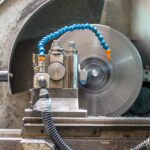
The Cinematic Technique: Use specialized cinema lenses to capture high-resolution macro close-ups of automated processes. Pair this with high-speed cameras shooting at 120 or 240 frames per second (fps).
The Visual Result: Slowing down a high-speed CNC cutting head, a laser-guided welding arm, or a rapid circuit placement machine allows the viewer to see the absolute stability of your machinery. It provides undeniable visual proof that human error has been completely eliminated from the production cycle.
3. Apply High-Contrast Technical Lighting to Metallic Surfaces
Automated machinery is primarily made of polished steel, aluminum, and complex electronic panels. Under standard, dull factory tube lights, these expensive setups can look greasy, dark, and flat on screen.
The Cinematic Technique: Professional gaffers bring high-powered, high-contrast external LED lighting rigs onto the factory floor.
The Visual Result: Strategically placing lights behind or to the side of the robots creates a stylized, futuristic rim-light effect on the machinery. It accentuates metallic contours, makes robotic movements stand out dynamically against dark backgrounds, and projects an ultra-clean, state-of-the-art facility image.
4. Integrate On-Screen Kinetic Typography and Motion Graphics
Visuals show the movement, but graphics communicate the business data. A B2B decision-maker needs to understand the exact performance metrics behind the automation they are witnessing.
The Cinematic Technique: Utilize clean, modern motion graphics and track bold text directly alongside the moving machines.
The Visual Result: As a robotic arm packages a product, callouts can flash on screen showing metrics like “Throughput: 5,000 Units/Hour” or “Tolerance Level: 0.02mm.” If a machine is completely enclosed and a physical lens cannot see inside, you can seamlessly transition into a 3D cutaway animation to illustrate the internal process, making complex engineering easily understandable for non-technical buying committees.
5. Blend Raw Mechanical Audio into the Post-Production Sound Design
A common mistake is completely muting the factory floor and overlaying a generic, repetitive stock music track from start to finish. This completely destroys the authenticity of an industrial film.
The Cinematic Technique: Isolate and clean the raw ambient soundscapes of your automation during post-production.
The Visual Result: The rhythmic hiss of pneumatic valves, the smooth whir of servo motors, and the sharp click of automated testing sensors should be subtly blended with a sophisticated, premium musical score. This mechanical rhythm is incredibly satisfying to a procurement director, serving as acoustic proof of a highly productive, active plant.
Your automated systems represent massive capital expenditure. If your video treats them like basic machinery, you are leaving substantial marketing power on the table.
By combining immersive drone navigation, slow-motion precision, commercial-grade technical lighting, and sharp data graphics, you transform your factory floor into an elite visual asset. This strategic presentation reassures global buyers that your brand doesn’t just promise international quality, you possess the automated infrastructure required to deliver it flawlessly, on time, every single time.