Shortlisting a new vendor for an international export contract is a high-stakes decision for any global procurement director or institutional supply chain head. A single error in selecting a manufacturing partner can lead to catastrophic financial losses, product recalls, and severe damage to their brand reputation.
Because global buyers are highly risk-averse, they do not make decisions based on fancy website claims or basic sales pitches. They follow a rigorous, multifaceted evaluation framework to filter out low-tier workshops and identify elite, dependable manufacturing enterprises.
If you want your facility to win high-value international contracts, you must understand exactly how global buyers evaluate manufacturing suppliers before issuing an RFQ.
1. Verifying Technical Capability and Production Capacity
The very first layer of evaluation is ensuring that a supplier can physically handle the requested order volume without collapsing the supply chain under pressure.
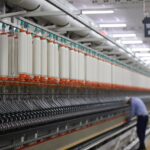
Infrastructure Audit: Buyers examine the physical size of your facility, your raw material stock yards, and the layout of your plant floor. They utilize professional factory walkthrough videos and FPV drone tours as a 24/7 virtual site visit to check your operational setup remotely.
Machinery Calibration: Procurement teams look closely at the age, origin, and technology of your machinery. Seeing modern, high-speed automated systems or precision Industry 4.0 robotics instantly scores higher than manual, labor-heavy assembly lines.
Scalability Metrics: They evaluate your throughput speeds and monthly capacity limits to guarantee that your plant can seamlessly absorb a sudden demand spike or urgent repeat orders.
2. Testing Quality Control and Testing Facilities
A good manufacturer can build a product, but an elite global vendor can guarantee that every single batch shipped across the ocean is 100% flawless. Buyers place massive emphasis on your quality defense mechanisms.
In-Process Audits: Buyers check whether your team monitors quality during production or only at the very end when it is too late to fix defects.
Laboratory Capabilities: They look for dedicated quality assurance labs equipped with sophisticated measuring tools, spectrometers, stress-testing rigs, and digital gauges.
Documentation Traceability: International auditors require a clear tracking system where every batch can be traced back to its raw material source and the specific machine operator responsible for it.
3. Reviewing Certifications and Regulatory Compliance
For enterprise-level global buying houses, regulatory compliance is completely non-negotiable. Operating with a vendor who cuts corners on compliance exposes the buyer to massive legal vulnerabilities.
International Standards: Buyers evaluate standard certifications like ISO 9001 for quality control, ISO 14001 for environmental management, and industry-specific certifications like CE or FDA compliance.
Workforce Safety and Ethics: Auditors look closely at worker welfare. A clean shop floor featuring properly marked safety walkways, highly visible emergency stations, and a workforce strictly enforcing matching uniforms and full Personal Protective Equipment (PPE) is mandatory. Seeing workers without safety helmets or boots will lead to immediate disqualification.
4. Assessing Financial Stability and Supply Chain Resilience
A supplier who goes bankrupt mid-production or runs out of raw materials due to poor cash flow can stall a global buyer’s entire product launch.
Financial Audits: Corporate buyers often request audited financial statements, credit ratings, and bank references to verify that your business possesses strong operational capital.
Raw Material Sourcing: They evaluate where you buy your primary ingredients or components. Having strong, multi-vendor relationships for raw materials proves to the buyer that your operations will not stop even during a regional market shortage.
5. Analyzing Logistics, Packaging, and Lead Times
A world-class product is completely useless if it gets damaged during maritime transit or fails to clear customs due to improper documentation.
Export Preservation Standards: Global buyers carefully evaluate your final packaging docks. They want to see secure heavy-duty wooden pallet crating, automated shrink-wrapping, and flawless shipping label grids.
Port Proximity and Warehouse Flow: They audit your logistics management and proximity to major ports to calculate exact lead times. Seeing an organized warehousing system and automated material handling equipment gives them ultimate confidence that their consignments will ship securely and arrive exactly on time.
When global buyers evaluate manufacturing suppliers, they are essentially looking for transparency, reliability, and risk mitigation. They do not buy products, they buy a supplier’s systemic capability to perform under pressure.
Enterprises that continue to rely on outdated, text-heavy brochures or amateur smartphone clips fail to clear the baseline trust filters of international procurement committees. By strategically documenting your automation, strict compliance standards, testing rigs, and logistics through high-end industrial video production, you cross the geographic barrier. You provide global buyers with the exact visual and operational proof they need to hit the accept button on your commercial proposal.